WhatsApp vs email: where should your business collect leads?
WhatsApp has a 98% open rate. Email has 20%. But that doesn't mean email is dead. Here's an honest comparison of when to use each channel for lead capture.

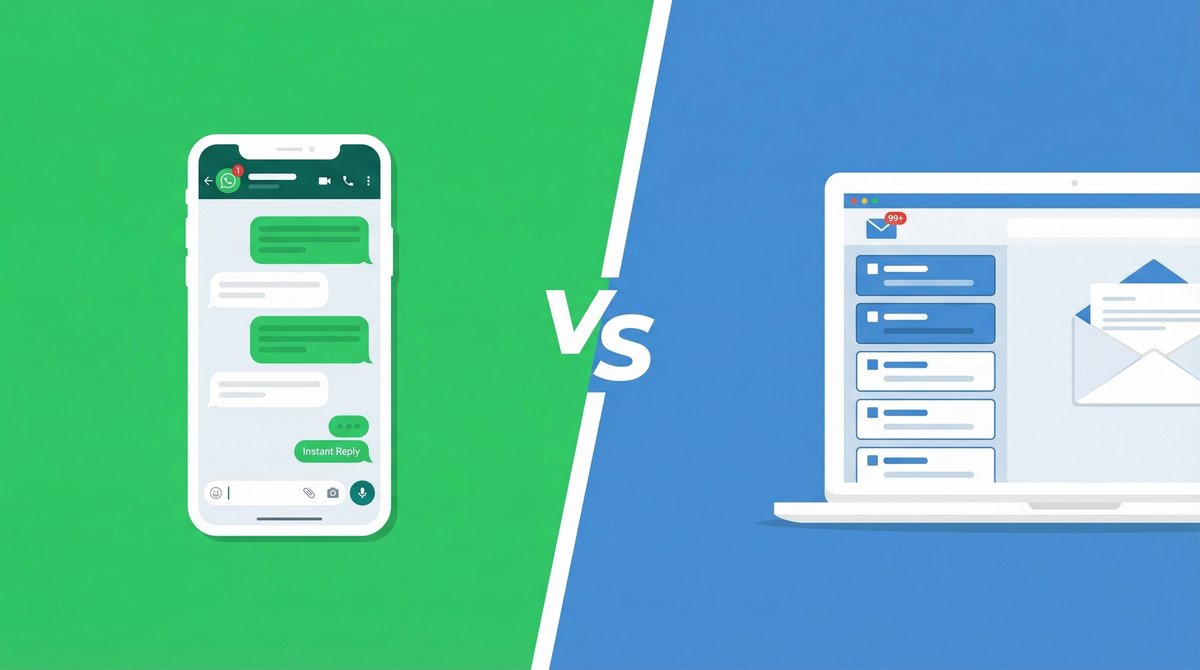
Every founder building a lead gen funnel eventually hits the same question: should we collect leads over WhatsApp or email? Some people treat it like a philosophical debate. We treat it like a data problem.
The honest answer: it depends on what you're optimizing for. But if you're optimizing for speed, conversion, and actually talking to your leads before they go cold, the data points in one direction pretty clearly.
The real question isn't which is better. It's which is better for what.
Email has been the default for lead capture for 25 years. It works. It scales. It has a whole ecosystem of tools built around it. We're not here to bury email.
But the world changed. Most of your customers are on their phones. In many markets, WhatsApp IS how people communicate for everything, personal and professional. And the expectations around response time have shifted dramatically.
The question isn't "email or WhatsApp." It's "what does this specific lead need right now, and which channel gets them there faster?"
The numbers that matter
Let's put the stats side by side, because they're genuinely striking.

WhatsApp:
- 98% open rate (vs. email's 20%)
- 45-60% click-through rate (vs. email's 2-5%)
- Average response time: under a minute
Email:
- ~20% open rate on a good day
- 2-5% click-through rate
- Average response time: 6-12 hours
The open rate gap alone should make you stop and think. For every 100 leads you capture, WhatsApp messages get read by 98 of them. Email gets read by 20. That's not a small difference. That's a different planet.
But here's the stat that matters most for conversion: a Harvard Business Review study found you're 100x more likely to connect with a lead if you respond within 5 minutes versus 30 minutes. Not 10x. One hundred times.
Email, structurally, cannot compete with that. WhatsApp can.
Where email still wins
We're being honest here, so let's give email its due.
Long-form nurture sequences. If you need to send a 6-part educational series over 3 weeks, email is built for this. The inbox is a place people go to read, not just respond.
Content marketing and newsletters. Substack and Beehiiv exist for a reason. Email newsletters have real, engaged audiences. WhatsApp isn't the right channel for a 2,000-word essay.
B2B enterprise sales with longer cycles. If your sales cycle is 6 months and involves a procurement WhatsApp for teams, email gives you the documentation trail and the formality those buyers expect.
Regulatory compliance. GDPR audit trails, documented consent, structured communication logs. Email's paper trail is an asset in regulated industries. WhatsApp's are harder to manage at scale.
Very high volumes. If you're running campaigns to 100K+ contacts, email infrastructure is mature, cheap, and purpose-built for that scale. WhatsApp Business API has limits and costs that make it less viable for pure broadcast at massive volume.
Where WhatsApp crushes email
Now the flip side. And this is where it gets interesting for most businesses reading this.
Speed-sensitive leads. Someone fills out a "get a quote" form, asks about see pricing, or wants to book a call. They're hot. They want an answer now. Email means they'll wait hours and probably move on. WhatsApp means you're in their pocket in seconds.
Markets where WhatsApp IS the internet. India, Brazil, Indonesia, the Middle East, Africa. In these markets, asking someone for their email address is like asking for their fax number. Their real attention is on WhatsApp. If you're capturing leads here and routing them to email, you're voluntarily moving to a worse channel.
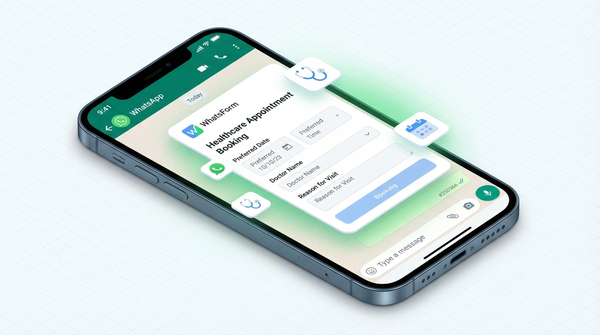
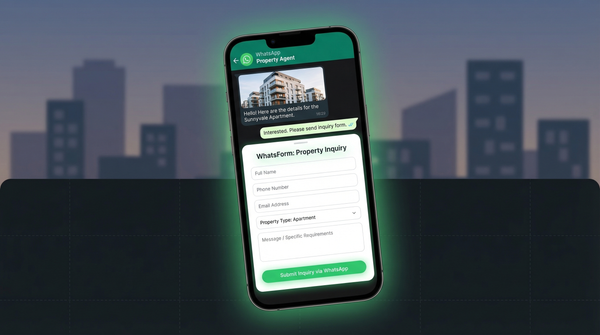
Service businesses where the first response determines the sale. Agencies, consultants, local services, real estate agents. The person who responds first usually wins the client. WhatsApp makes you the first responder by default.
Mobile-first customers. Which is most customers now. WhatsApp is a native mobile experience. Email on mobile is friction. Reading, responding, clicking, converting. It's all harder on a phone.
Trust and the personal feel. A WhatsApp message feels like a conversation. An email feels like marketing. That's not just vibes. It's why reply rates are so much higher. When you want a human connection early in the funnel, WhatsApp builds it faster.
The hybrid approach: use both, use them right
The smartest approach isn't picking a winner. It's matching the channel to the moment.
Use WhatsApp for hot leads. Someone who just asked for a demo, a quote, or a price. First response on WhatsApp. Conversion happens in the conversation. That's where you want to be for the first 24-48 hours.
Use email for warm leads. After the initial conversation, when you want to nurture over weeks or months, email takes over. That's where educational content, case studies, and long-form sequences belong.
The playbook: capture the lead on WhatsApp, have the conversion conversation there, then move them into your email nurture once they've engaged. You get the speed advantage of WhatsApp and the scale advantage of email.
How WhatsApp forms bridge the gap
The practical challenge is this: most lead capture tools are built for email. Forms that collect a name, email, and maybe a phone number. The whole flow routes to an inbox.
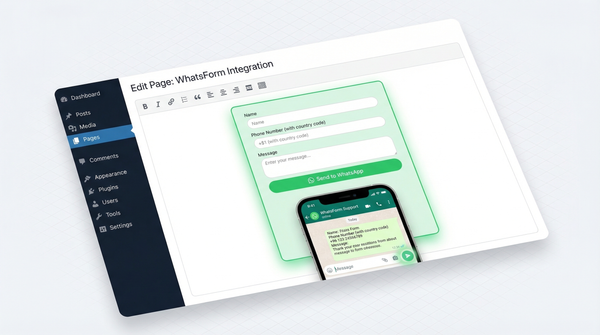
WhatsApp forms flip that. You collect the data (name, number, whatever you need), and the lead lands in a WhatsApp conversation instead of an email inbox. But you're not losing the data. You can still export to your CRM, sync to email, and build your list the usual way. You just start the conversation on WhatsApp instead of waiting for an email open.
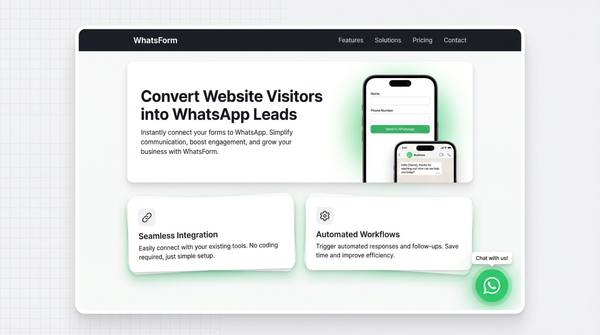
Full disclosure: we built this. WhatsForm is our tool for creating forms that route leads directly into WhatsApp conversations. We built it because we kept seeing businesses lose speed-sensitive leads to slow email follow-ups, and we thought there had to be a better way to start the conversation.
The bottom line
Email is not dead. Email is excellent at what it's designed for: structured, scalable, async communication with people who already trust you.
But for capturing and converting a new lead, especially in mobile-heavy markets, the math is pretty clear. Faster response wins more deals. WhatsApp gets you there faster.
If you're currently routing all your leads to an inbox that you check twice a day, you're probably losing more deals than you know.
For a detailed walkthrough, check our help center guide on WhatsApp forms.
The fix isn't complicated. Capture on WhatsApp. Nurture on email. Let each channel do what it's actually good at.
Want to try it? Build your first WhatsApp form free at WhatsForm. Takes about 3 minutes. No WhatsApp Business API needed to get started.