How to Build a WhatsApp Sales Funnel

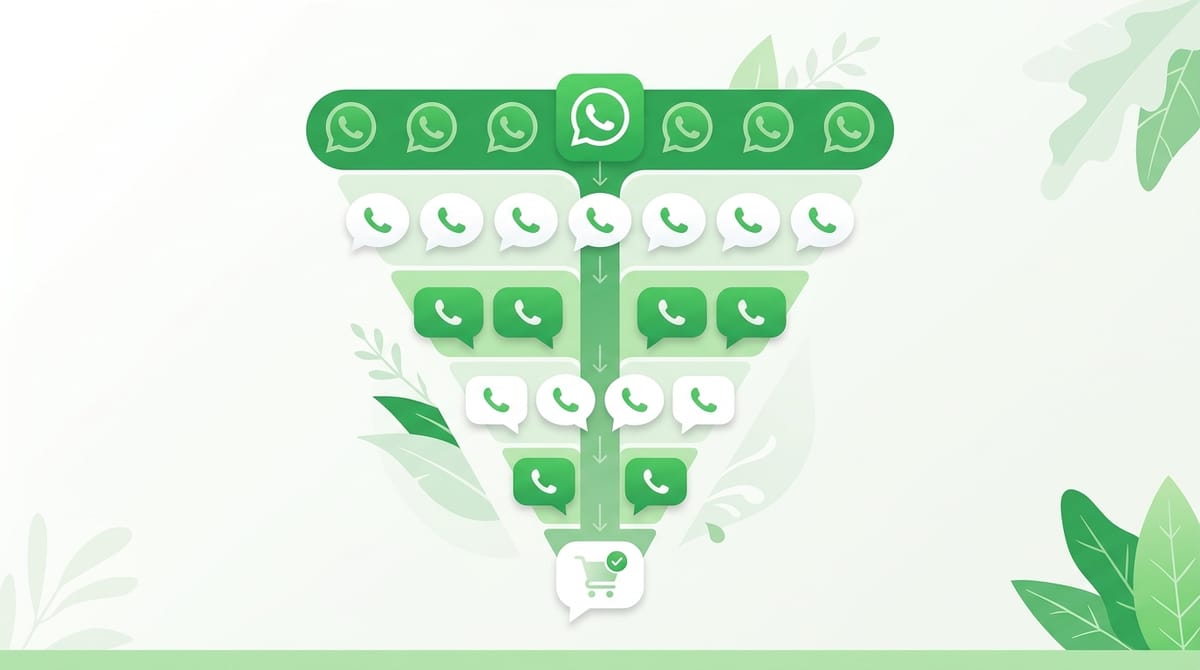
Most businesses use WhatsApp the wrong way. They use it to answer questions, send invoices, and have scattered back-and-forth conversations. That is useful, but it is not a sales system.
A sales system moves people through stages: from not knowing you exist, to trusting you enough to buy, to buying again. Most businesses do this through email funnels or paid ads. But WhatsApp? The open rates are 98%. The response rates destroy email. And people are already on it.
If you are a small business owner selling anything, from coaching packages to physical products to services, this guide will show you how to build a WhatsApp sales funnel that actually works.
What Is a WhatsApp Sales Funnel?
A sales funnel is just a structured path that takes someone from stranger to customer. A WhatsApp sales funnel runs that same path inside WhatsApp.
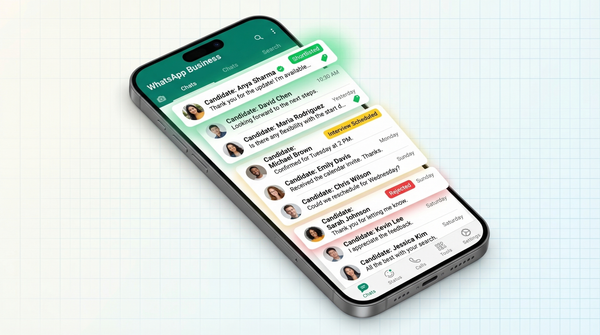
Instead of landing pages, email sequences, and shopping carts, your funnel happens in chat. Someone discovers you, lands in your WhatsApp, gets qualified, gets nurtured with value, receives an offer, and buys. All in one place they already check 30+ times a day.
This is not theory. Businesses in e-commerce, coaching, real estate, education, and local services are already closing deals this way. The advantage is not just the open rates. It is the personal feel. A message from your WhatsApp number feels different from a drip email from [email protected].
Here is how to build yours, stage by stage.
Stage 1: Awareness and Capture
Your funnel starts with getting people into your WhatsApp in the first place. This is the capture stage, and most businesses either skip it entirely or make it too hard.
Ways to get people into your WhatsApp funnel
- Click-to-WhatsApp ads: Facebook and Instagram both support ads that open a WhatsApp chat directly. Great for cold traffic.
- QR codes: Put a WhatsApp QR code on your packaging, your storefront, your business card, or your YouTube videos.
- Link in bio: A WhatsApp link in your Instagram or TikTok bio converts followers into leads instantly.
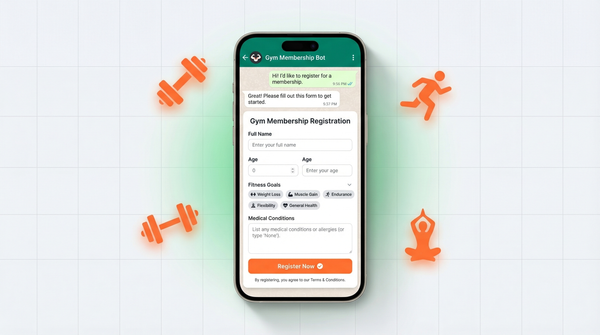
- WhatsApp forms: This is underused and incredibly effective. A form that collects name, email, and a qualifying question, then sends the submission directly into a WhatsApp conversation. That is what WhatsForm does. You build the form, embed it on your site or share the link, and every submission lands in your WhatsApp as a message. No CRM needed. No email delay. The lead shows up in your chat immediately.
The goal of this stage is simple: get a real person into a real WhatsApp conversation with you. Everything else builds from there.
Stage 2: Qualification
Not everyone who messages you is a serious buyer. Qualification is where you figure that out fast, without wasting your time or theirs.
The key is to ask the right questions early. Not aggressive, not salesy. Just curious.
Good qualifying questions for WhatsApp
- What are you looking for exactly?
- When are you hoping to get started?
- Have you tried anything else for this before?
- What is your budget range?
- Are you the person who makes the final call on this?
You do not need all five. Pick two or three that fit your business. The goal is to separate people who are genuinely interested from people who are just browsing.
A tip: if you used a form at the capture stage (like with WhatsForm), you can ask qualifying questions in the form itself. By the time someone lands in your WhatsApp, you already know if they are worth pursuing. That saves a lot of back and forth.
Stage 3: Nurture
Most buyers are not ready to purchase the first time they talk to you. Nurturing is how you stay on their radar and build the trust that eventually converts them.
On WhatsApp, nurturing looks different from email. It is less formal. It is shorter. It feels more like a friend sharing something useful than a brand running a campaign.
How to nurture leads on WhatsApp
- Broadcast lists: WhatsApp lets you create broadcast lists of up to 256 contacts. Send value: a quick tip, a case study, a relevant update. Not promotions every time. Value first.
- Follow-ups: If someone went quiet after your initial conversation, a simple check-in message can reopen the conversation. Keep it casual.
- Voice notes: This is a cheat code. A 30-second voice note feels personal in a way that text cannot match. Use it when you want to build trust fast.
- Status updates: Your WhatsApp Business status is free real estate. Post behind-the-scenes content, customer wins, limited offers. People who are watching your status are warm leads.
The nurture stage is not about constant contact. It is about consistent value until they are ready to buy.
Stage 4: Conversion
This is where you make the offer and close the deal. WhatsApp is surprisingly good for this because the conversation is already personal. You are not sending a cold pitch. You are continuing a conversation.
How to close in chat
Make your offer clear and specific. Do not bury it in a long message. Say what it is, what it costs, and what they need to do next.
Something like: "Based on what you told me, our [Product/Service] would be a great fit. It is [price], and you can get started right away. Want me to send you the link?"
Handle objections in chat the same way you would on a call. When someone says they need to think about it, ask what is making them hesitate. Often there is one specific concern you can address directly.
Common objections and how to handle them
- "It is too expensive" - Ask what budget they had in mind. Offer a payment plan if you have one. Reinforce the value relative to the cost.
- "I need to check with my partner/boss" - Offer to send something they can share with the decision-maker. Keep the conversation alive.
- "I am not ready yet" - Find out what "ready" means to them. Set a specific follow-up date rather than leaving it open-ended.
WhatsApp makes follow-up natural. You are already in their chat. Use that.
Stage 5: Retention
Getting a customer is expensive. Keeping them is cheap. WhatsApp is one of the best tools for retention because it keeps the relationship warm without requiring much effort.
How to keep customers in your WhatsApp ecosystem
- Add buyers to a separate broadcast list for customers only. Send them exclusive offers, early access, or loyalty perks.
- Check in after purchase. A quick "How did it go?" message builds goodwill and surfaces upsell opportunities.
- Ask for referrals over WhatsApp. A direct ask in chat converts better than an automated email.
- Create a WhatsApp group for your best customers if that fits your business. The community feeling increases retention significantly.
Repeat customers are easier to close, cheaper to reach, and more likely to refer. Do not let the WhatsApp relationship die after the first sale.
Tools You Need
You do not need a complicated tech stack to run a WhatsApp sales funnel. Here is what actually matters:
WhatsApp Business
Download the free WhatsApp Business app. It gives you a business profile, quick replies, away messages, labels to organize your chats, and broadcast lists. This is your core tool for managing conversations.
WhatsForm
WhatsForm handles the capture stage. You build a form in minutes, share the link or embed it on your site, and every submission comes directly into your WhatsApp as a message. It is the cleanest way to connect your top-of-funnel with your WhatsApp conversations.
Instead of asking people to find your WhatsApp number and message you manually, you give them a form. They fill it out. They land in your WhatsApp. You already know their name, what they want, and how they answered your qualifying questions. The conversation starts warm instead of cold.
Those two tools are enough to run a serious WhatsApp funnel. You can add scheduling tools, payment links, or CRM integrations as you scale. But start simple.
Common Mistakes That Kill WhatsApp Funnels
A lot of businesses try WhatsApp as a sales channel and give up because they make these mistakes:
- Treating it like email: Long, formatted messages do not work in WhatsApp. Keep your messages short. One idea per message. Conversational tone.
- Selling too fast: If someone just opted in and your first message is a sales pitch, they will ghost you. Qualify first. Build trust. Then offer.
- No follow-up system: Most deals happen after the third or fourth follow-up. If you are not following up consistently, you are leaving money on the table.
- Mixing personal and business: Use WhatsApp Business, not your personal number. It keeps things professional and gives you the right tools.
- No capture process: Just sharing your number and hoping people message you is not a funnel. You need a structured entry point, whether that is a form, a QR code, or a click-to-chat ad.
- Ignoring broadcast lists: Most businesses use WhatsApp for 1-on-1 chat only. Broadcast lists let you stay in touch with hundreds of leads at once without it feeling like a mass email.
Getting Started
You do not need to build the whole funnel at once. Start with the entry point.
Go to whatsform.com, create a form for your business, and start sending traffic to it. Every submission will land directly in your WhatsApp. From there, you can start qualifying, nurturing, and closing.
The businesses winning on WhatsApp right now are not doing anything complicated. They have a clean entry point, they have a system for conversations, and they follow up consistently. That is it.
If you already have leads but no system to work them, a WhatsApp funnel is the fastest way to change that. Set it up this week. You will see why the open rates are not the only reason people love this channel.