WhatsApp Marketing Strategy for Small Businesses

WhatsApp has over 2 billion active users. But walk into most small businesses and ask how they use it, and you'll hear the same answer: customer support, order confirmations, maybe a few broadcast messages during festivals.
That's not a strategy. That's using a Formula 1 car to pick up groceries.
This article is about building a real WhatsApp marketing strategy. Not a list of tips. An actual plan you can follow, starting today, that turns WhatsApp into a revenue-generating channel for your business.
Why WhatsApp Marketing is Different
Email open rates hover around 20-25% on a good day. Social media organic reach has collapsed. Paid ads are getting more expensive. But WhatsApp messages? They get opened at rates above 90%, often within minutes.
That's not a small difference. That's a different category of channel.
Three things make WhatsApp fundamentally different from every other marketing channel:
- It's personal. WhatsApp lives next to messages from family and friends. When your business shows up there, you're in intimate territory. That's power, but it also means you can destroy trust faster than anywhere else.
- It's conversational. Unlike email or social posts, WhatsApp invites replies. People expect back-and-forth. The best WhatsApp marketing feels like a conversation, not a broadcast.
- It has real reach. In markets like India, Brazil, Indonesia, and across Europe and Africa, WhatsApp is the primary communication app. You're not fighting for attention in a crowded feed. You're arriving directly.
These three factors change how you need to think about the channel. WhatsApp marketing isn't just email marketing on a different platform. It requires a different mindset and a different strategy.
The 5 Pillars of a WhatsApp Marketing Strategy
Pillar 1: Building Your WhatsApp Audience
Everything starts here. You can have the best content in the world, but if nobody's opted in, you're talking to yourself.
Building a WhatsApp audience is different from growing an email list. You can't scrape contacts. You can't buy a list. Every person on your WhatsApp contact list needs to have explicitly opted in. This is both a legal requirement and a practical one: WhatsApp users who didn't choose to hear from you will report you as spam, and your account will get banned.
So how do you build it?
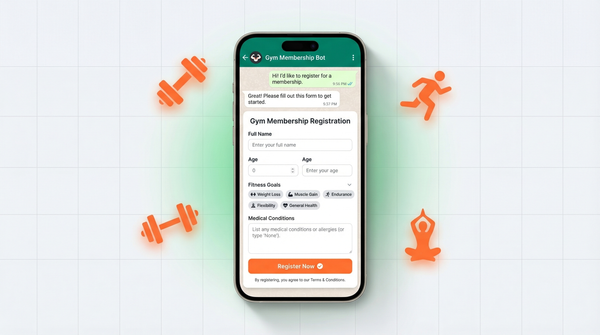
- Lead capture forms. The most efficient way. Add a form to your website, landing pages, or even your email signature that asks visitors to share their WhatsApp number in exchange for something valuable. A tool like WhatsForm makes this simple: you create a form and responses come directly to your WhatsApp. No complicated integrations, no CRM setup required. Just a form that works.
- QR codes. Print them on packaging, receipts, business cards, or in-store displays. A scan takes someone straight to a WhatsApp chat with you. Pair this with a clear offer ("Scan to get 10% off your next order") and you'll see strong conversion.
- Click-to-WhatsApp ads. Facebook and Instagram let you run ads where the CTA opens a WhatsApp conversation. These work well for service businesses, where a quick chat is the natural first step.
- Existing touchpoints. Every order confirmation, delivery notification, or post-purchase email is an opportunity to invite customers onto WhatsApp for faster support or exclusive deals.
The goal isn't to collect the most numbers. It's to collect numbers from people who actually want to hear from you. Quality beats quantity here, every time.
Pillar 2: Segmentation
One of the fastest ways to burn your WhatsApp audience is to treat everyone the same. Someone who just discovered your business does not want the same message as a customer who's bought from you three times.
WhatsApp gives you two main tools for managing contacts: broadcast lists and groups.
Broadcast lists send the same message to multiple people, but each recipient receives it as a personal one-to-one message. They can't see other recipients. This is ideal for marketing messages: promotions, product launches, announcements.
Groups are visible to all members. They work better for community building: loyalty clubs, customer communities, or niche interest groups around your product.
Beyond these tools, you need to think about segmentation by intent. At a minimum, separate your contacts into these buckets:
- Leads (people who've opted in but haven't bought yet)
- First-time buyers (recently converted, need confirmation they made the right call)
- Repeat buyers (your most valuable segment, treat them accordingly)
- High-value customers (if you have them, they deserve a VIP experience)
The more precisely you can segment, the more relevant your messages become. And relevance is what keeps people from hitting the block button.
Pillar 3: Content Strategy
The biggest mistake businesses make on WhatsApp is sending messages that work fine on Instagram but feel wrong here. Long promotional copy. Overly polished graphics. Hard-sell language.
WhatsApp is a personal channel. Your content needs to match that.
What actually works:
- Short, direct messages. If you need more than three sentences to make your point, you're writing an email, not a WhatsApp message.
- Voice notes. Especially for service businesses, a brief voice message from the founder or team feels remarkably personal. People aren't used to it, which is exactly why it works.
- Behind-the-scenes content. "Here's what we're working on" or "Here's how we make this product" performs well because it feels exclusive.
- Questions and polls. "Which would you prefer?" or "We're deciding between two options, what do you think?" These drive replies and make customers feel involved.
- Time-sensitive offers. WhatsApp is great for flash sales and limited-time deals because the open rates mean people actually see them in time.
How often should you send? No more than 3-4 times per month for broadcast messages. If you're sending every day, you're going to start losing people. The exception is transactional messages (order updates, appointment reminders) which people actually want frequently.
Pillar 4: Lead Nurturing and Conversion
Getting someone to opt in is the start, not the finish. Most people who join your WhatsApp list aren't ready to buy the day they sign up. Your job is to stay present, build trust, and be there when they're ready.
A simple nurture sequence for a new WhatsApp subscriber might look like this:
- Day 1: Welcome message. Deliver whatever you promised (discount code, guide, etc.). Tell them what to expect from this number.
- Day 3-5: Share something useful. A tip, a case study, a common question answered. No selling yet.
- Day 7-10: Introduce your product or service with a soft offer. No hard push, just "if you're ready, here's where to go."
- Ongoing: Mix of value-add content and gentle offers. Every third or fourth message can have a CTA. The rest should give, not take.
The key is making your WhatsApp presence feel like an asset to the subscriber. If every message tries to sell them something, they'll leave. If you're genuinely useful, they'll stay, and they'll buy when they're ready.
When you do push for conversion, make the ask specific and easy. "Reply YES and I'll send you the link" is better than "Click the link to learn more." Reduce friction at every step.
Pillar 5: Retention and Loyalty
Acquiring a customer costs 5-7x more than keeping one. WhatsApp is one of the best channels you have for post-purchase retention, and most businesses completely ignore this.
After someone buys, here's where WhatsApp shines:
- Order and delivery updates. People love knowing where their stuff is. Real-time updates over WhatsApp feel more personal than email notifications.
- Check-ins. A week after purchase: "How are you getting on with [product]? Any questions?" This builds goodwill and often surfaces issues before they become refund requests.
- Exclusive offers for existing customers. Your best customers should get your best deals first. A "just for our WhatsApp community" offer makes people feel valued.
- Re-engagement campaigns. If someone hasn't bought in 90 days, send a simple check-in. "It's been a while, here's what's new" or a targeted offer based on what they bought before.
- Referral asks. Happy customers are your best salespeople. A direct message asking for a referral, with a clear incentive, converts better than any referral email.
WhatsApp Marketing by Business Type
Retail
Retail businesses get the most obvious wins: new arrivals, flash sales, restock alerts, seasonal promotions. The trick is making it feel curated rather than spammy. "We just got 20 new winter pieces, here are the 3 I'd pick first" beats "SALE SALE SALE everything 30% off."
Service Businesses
For consultants, agencies, coaches, clinics, salons and similar businesses, WhatsApp is a natural fit for booking, reminders, and follow-ups. The conversion path is short: someone sees your QR code, opens a chat, and books in minutes. Post-service follow-ups asking for reviews or referrals also work extremely well here.
B2B
WhatsApp is underused in B2B. Decision makers are on WhatsApp constantly, and a well-timed message from a real person cuts through the noise that email never can. Use it for warm outreach, deal follow-ups, and keeping existing clients updated on account activity. Keep it professional but still conversational.
What NOT to Do
You can wreck a WhatsApp marketing program fast. Here's what destroys it:
- Messaging people who didn't opt in. This gets your number reported and banned. Full stop.
- Ignoring replies. If you're sending messages but not responding when people reply, you're burning trust. WhatsApp is conversational. Treat it that way.
- No opt-out option. Always tell people how to stop hearing from you. "Reply STOP to unsubscribe" isn't just good practice, it prevents resentment from building up.
- Sending too often. The quickest way to get blocked. Respect the fact that you're in someone's personal inbox.
- Copy-pasting email marketing. Long subject lines, formal language, HTML-heavy design. None of it works here. Write like a person, not a marketing department.
- Using a personal number for business. Once you have more than a handful of contacts, use WhatsApp Business. It gives you proper tools for labels, quick replies, and catalog management.
How to Measure WhatsApp Marketing Success
WhatsApp doesn't give you the analytics dashboard you'd get with email or ads. But there are clear signals to track:
- Opt-in rate: How many people who see your WhatsApp sign-up point actually join. A strong opt-in rate tells you your offer is compelling.
- Message open and read rate: Watch the blue ticks. If messages are going unread, either your timing or your content needs work.
- Reply rate: This is the metric most people miss. A high reply rate means your messages are landing as conversations, not broadcasts.
- Conversion rate: When you send a promotional message, how many people take action? Track this via UTM links or unique coupon codes.
- Unsubscribe and block rate: If people are opting out or blocking you, something is wrong. High churn here is a signal to slow down and reassess your content and frequency.
- List growth rate: Is your audience growing month over month? If it's flat or shrinking, your opt-in strategy needs attention.
You don't need a complex analytics setup. A simple spreadsheet tracking these numbers monthly will tell you everything you need to know about whether your WhatsApp marketing is working.
Getting Started
Here's the honest version of getting started: most businesses overthink this and never begin. You don't need a WhatsApp Business API account on day one. You don't need an automation platform. You don't need a 12-month content calendar.
You need three things: a way to collect opt-ins, a reason for people to join, and a commitment to showing up consistently.
Start with a form. WhatsForm lets you create a form that delivers responses straight to your WhatsApp, so you can start building your audience without any technical setup. Add it to your website, share the link on social media, print the QR code on your packaging.
Then commit to sending one genuinely useful message per week for the first month. See what people respond to. Build from there.
WhatsApp marketing isn't complicated. It just requires you to treat your audience like people, show up regularly, and resist the urge to turn every message into a sales pitch. Do that, and it becomes one of the highest-return channels in your marketing mix.